
A Linguistic Approach to the Syntax of Early Music (2015)
A human-centered framework integrating regulations, sensors, urgency, and multimodal UX for safer ADAS interactions.
Launch
Historical Developments of Musical Systems (2018)
Explores Greater Perfect System and Hexachord Theory from Roman to Renaissance periods and their modern reception.
Launch
A Generative Tool for Schenkerian-Caplinian Form Analysis (2018)
Analysis of Beethoven's Op. 7, mvt.i, integrating Schenkerian and Caplinian theories with generative grammar concepts.
Launch
An Interactive Media Oriented Analysis of Tonal and Post-Tonal Music (2023)
An exploration of analytical techniques for tonal and post-tonal music, emphasizing association over prolongation.
Launch
Bridging Music and Text with Generative Models
A study of Schubert’s music showing how melody and lyrics interact to express emotions clearly for listeners
Launch
A Music Predictive Coding System: Chroma Directed Initial and Final Tonic Assignment
Analyzes starting and ending tonics using chroma, grammar, and data rules to show tonal changes clearly and effectively
Launch
Data Analysis On "Music And Memory" Research In Music And Health Science Contexts
This study addresses the lack of structural tools by integrating real-time multimodal software in music and memory research
Launch
A Cognitive Approach in In-vehicle Warning Sound Design
This study presents a human-centered auditory warning model aligning ADAS alerts to reduce cognitive load and improve safety
Launch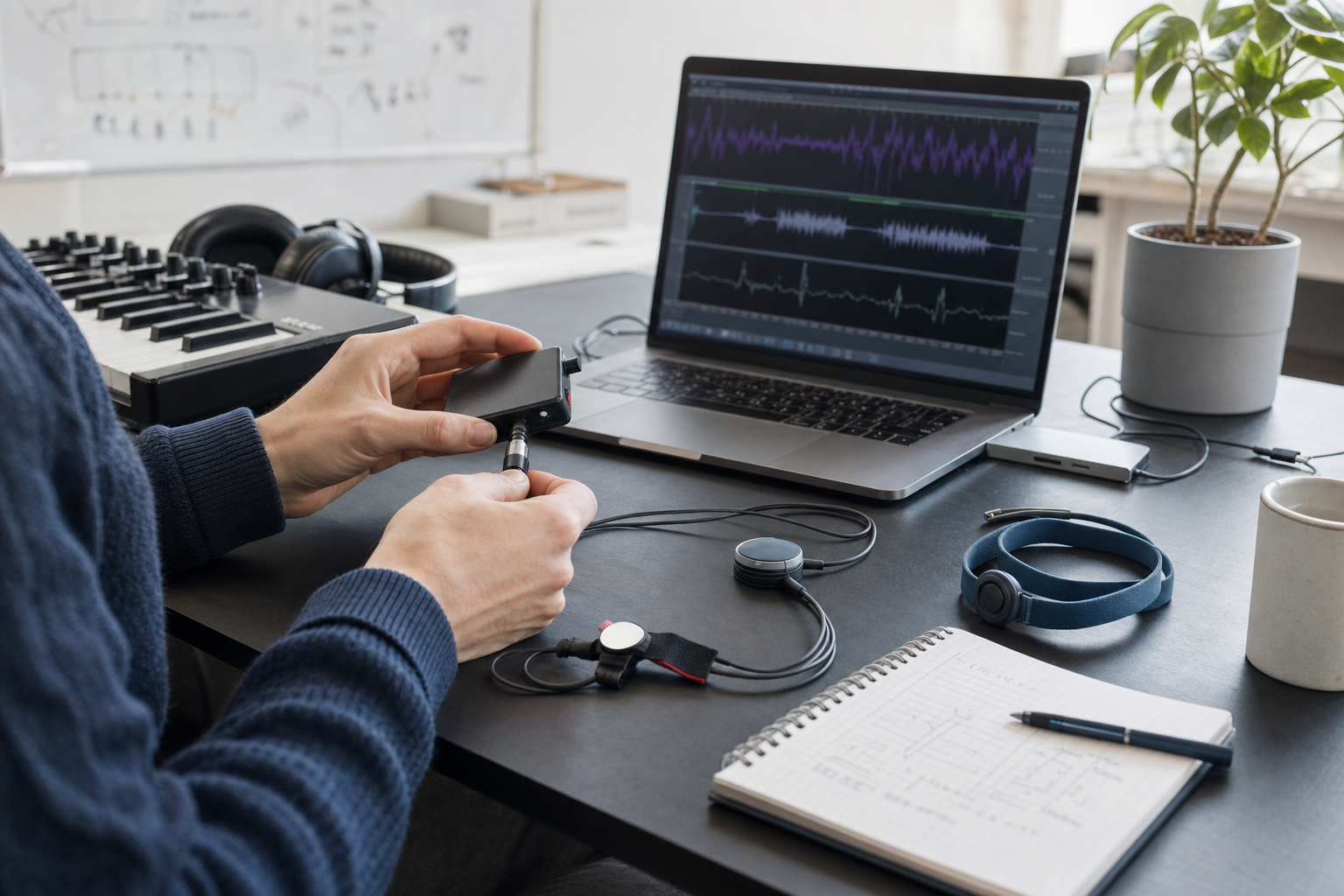
Real-Time Software for Music and Health Science Contexts
This review shows current systems cannot align harmony with real-time EEG or behavior, highlighting need for multimodal tools
Launch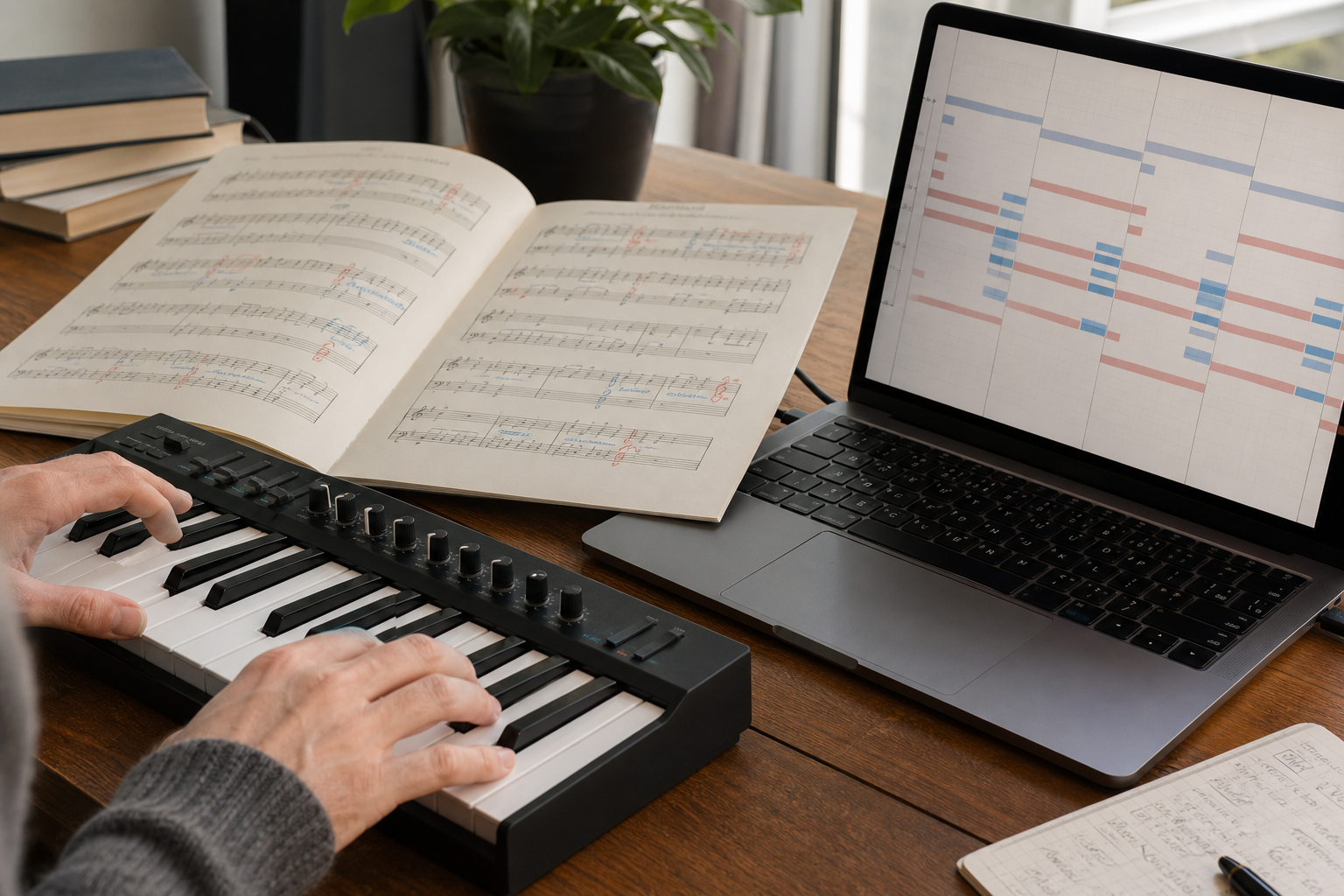
Real-Time Automatic Roman Numeral Analysis
Enables real-time Roman numeral analysis of MIDI via distributed system with backend processing, WebSocket communication, and browser computation
Launch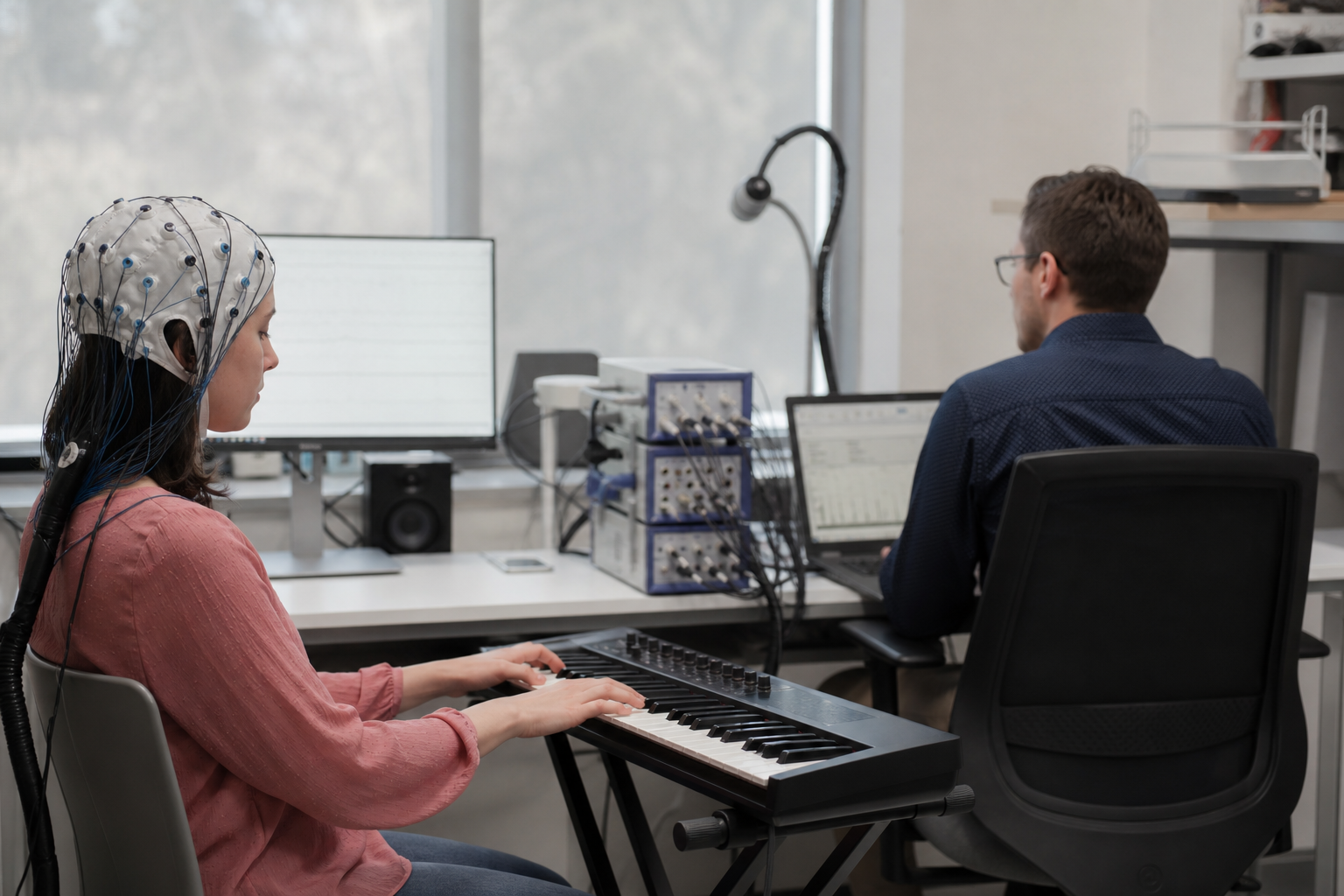
Real-Time Multimodal Framework
Real-time system synchronizing MIDI-based harmonic tokens with EEG, using adaptive windowing and lookup models to track musical memory dynamics
View Poster
Heart-Beat Adaptive Music Recommendation System
Real-time system maps HR and HRV to valence–energy space, enabling interpretable, physiology-driven music recommendations using enriched datasets
Launch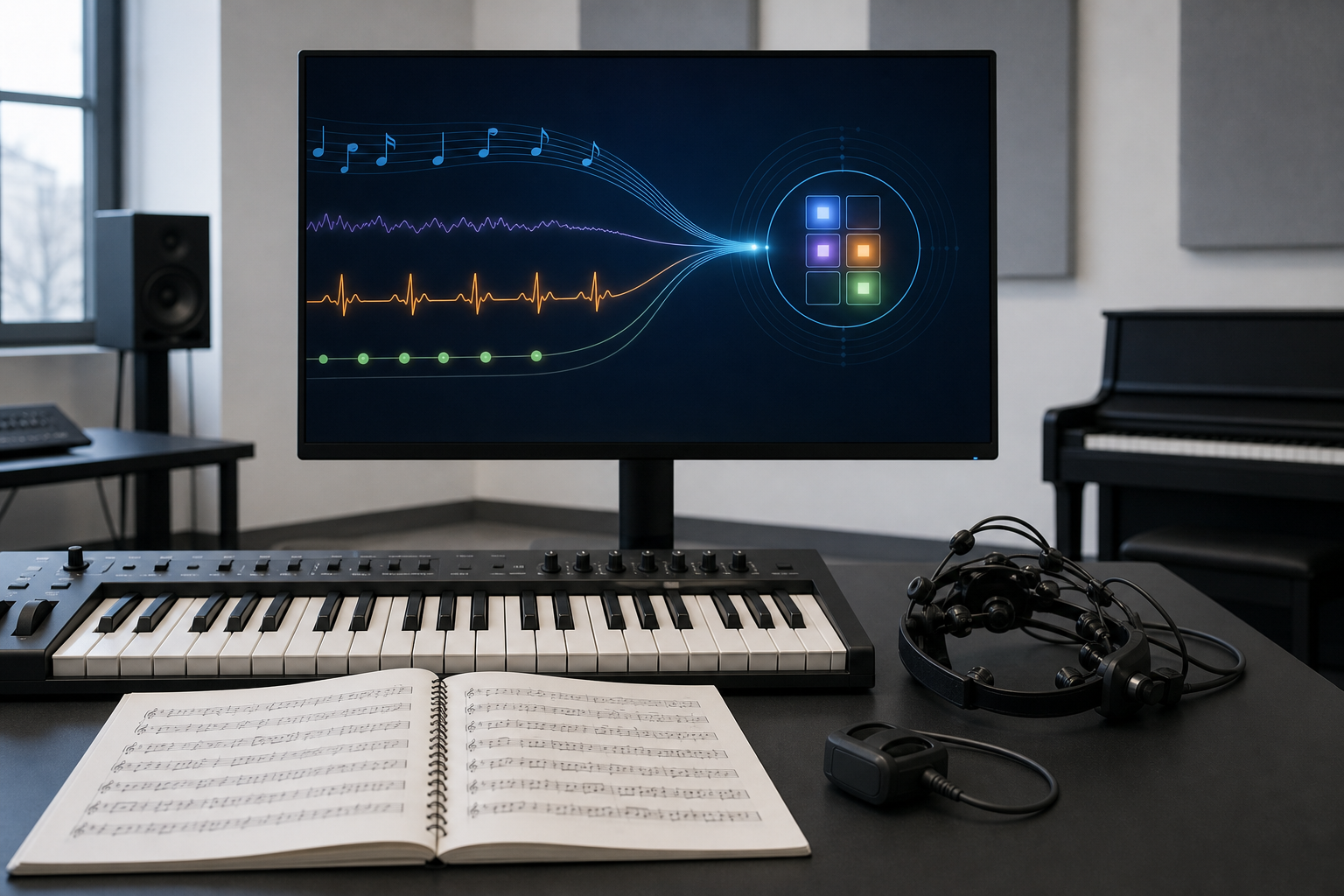
MusWM: A Capacity-Limited Architecture for Musical Working Memory
A cognitively grounded, real-time architecture that makes working-memory capacity, attentional control, and multimodal binding explicit across musical, physiological, and behavioral streams.
View Poster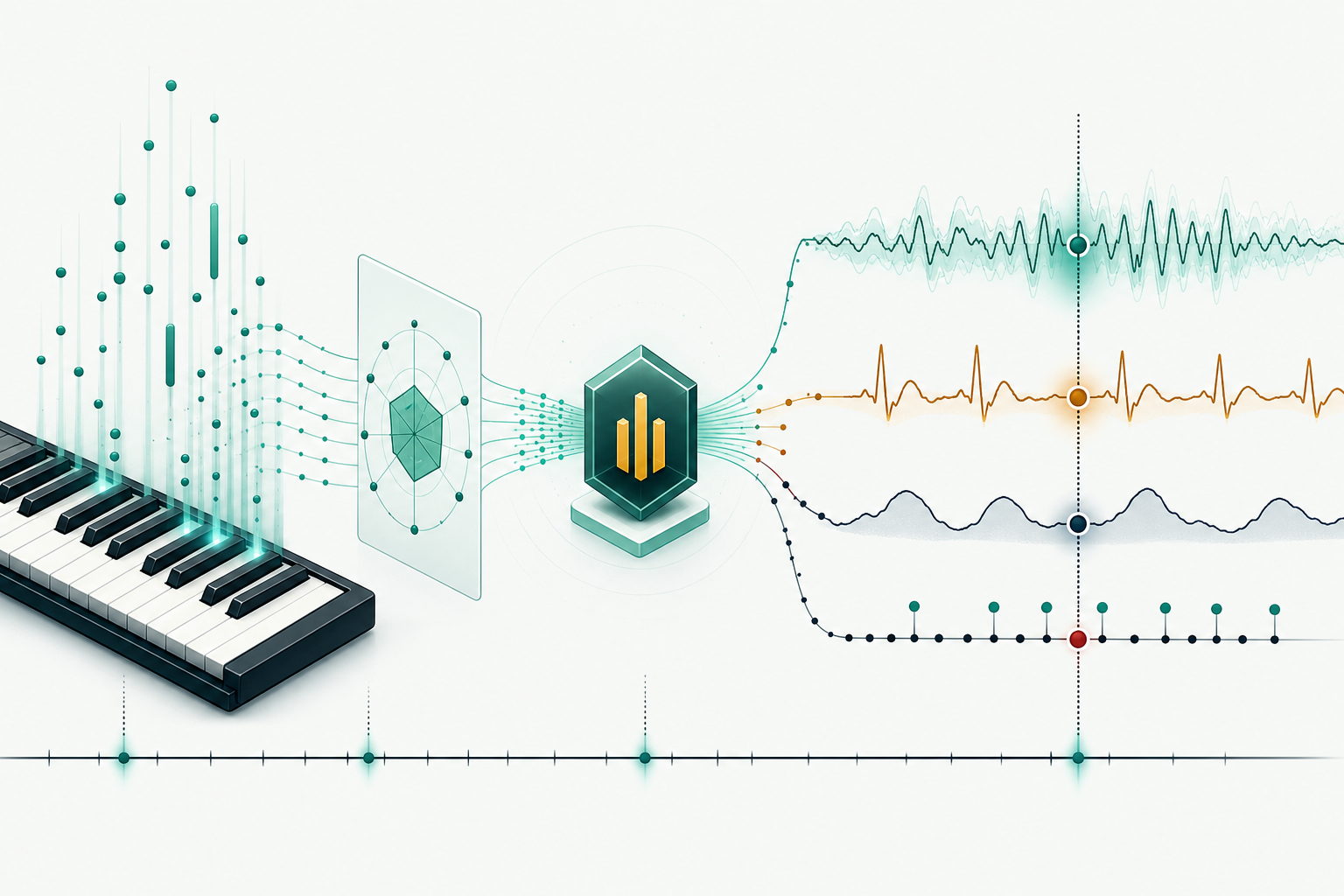
A Real Time Multimodal Architecture for Musical Expectation
A real-time framework that converts live MIDI into explainable Roman-numeral tokens and synchronizes each harmonic event with EEG, cardiovascular, and behavioral streams.
View Poster